
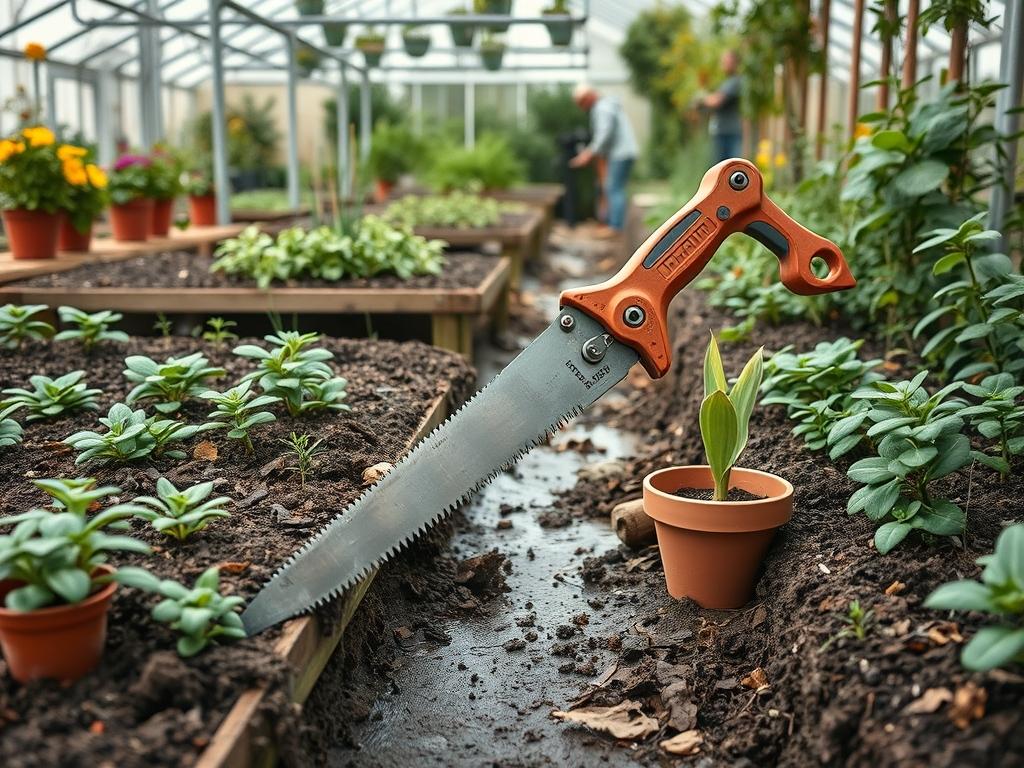
Maintaining the architectural integrity of a high-end landscape requires more than just a creative eye and a high-quality irrigation system. It demands a rigorous commitment to tool maintenance, specifically regarding the implements used to shape the living components of the design. When a landscape architect specifies a Quercus virginiana or a series of Carpinus betulus as a focal hedge, the health of those specimens depends on the precision of the cuts made during their formative years. A dull blade does not just make the labor harder; it creates jagged, traumatic wounds on the plant tissue that invite pathogens and wood-boring insects. Sharpening pruning saws is, therefore, a foundational skill that bridges the gap between a theoretical site plan and a thriving, sustainable outdoor environment. By ensuring that every folding saw and pole saw in the inventory is honed to a razor edge, the professional can achieve effortless cuts that promote rapid compartmentalization of decay, preserving the aesthetic and structural value of the landscape.
Landscape Design Principles
Successful landscape architecture relies on the interplay of several core principles that guide the placement of every element from flagstone pavers to ornamental grasses. Symmetry and visual balance provide the framework for the viewer’s experience. Symmetrical designs often utilize a central axis to create a sense of formality and order, while asymmetrical designs achieve balance through the strategic distribution of visual weight. For instance, a heavy monumental boulder on one side of a walkway might be balanced by a dense cluster of Viburnum tinus on the other. Focal points act as the anchors of the design, drawing the eye toward specific features like a custom water wall or a specimen Acer palmatum.
Elevation layers add depth and complexity to the site. By utilizing retaining walls constructed from natural fieldstone or poured concrete, a designer can create distinct terraces that solve grading issues while providing new planting opportunities. Irrigation planning must be integrated into these layers from the outset to ensure that water pressure is sufficient for the highest points of the property. Walkways serve as the circulatory system of the garden, guiding movement and defining the boundaries of different outdoor rooms. The choice of materials, whether decomposed granite, pavers, or stepped stones, must complement the overall architectural style of the home while ensuring proper drainage and permeability to prevent runoff.
Plant and Material Selection
The following table outlines high-performance plant species commonly utilized in professional landscape designs, emphasizing their specific environmental requirements and maintenance needs.
| Plant Type | Sun Exposure | Soil Needs | Water Demand | Growth Speed | Maintenance |
| :— | :— | :— | :— | :— | :— |
| Buxus sempervirens | Full Sun to Partial Shade | Well-drained, Loamy | Moderate | Slow | High (requires frequent shearing) |
| Lagerstroemia indica | Full Sun | Adaptable/Well-drained | Moderate | Medium | Medium (structural pruning) |
| Taxus x media | Partial Shade to Full Shade | Moist, Well-drained | Moderate | Slow | Low |
| Pennisetum alopecuroides | Full Sun | Fertile, Moist | High | Fast | Low (annual cutback) |
| Ilex glabra | Full Sun to Partial Shade | Acidic, Moist | High | Medium | Low |
| Cornus sericea | Full Sun to Partial Shade | Wet, Silty | High | Fast | Medium (rejuvenation pruning) |
Implementation Strategy
The transition from a design blueprint to a physical reality requires a methodical implementation strategy. The process begins with site grading, where the land is sculpted to direct water away from structures and toward designated drainage basins or bioswales. Proper grading is the most critical step in ensuring the longevity of both the hardscape and the flora. Once the skeleton of the landscape is established, edging materials such as steel bender board or cobblestone are installed to provide crisp transitions between lawns and planting beds.
When the time comes for planting, the method of pruning becomes paramount. This is where the importance of Sharpening Pruning Saws is truly realized. Before any major tree or shrub is positioned, the landscape professional should inspect the root balls and canopy for damaged limbs. Utilizing a 6-inch slim taper file, the teeth of the pruning saw should be honed by following the factory bevel angle, which is typically between 20 and 30 degrees. For modern tri-edge saw blades, a diamond-grit hone is often necessary because the steel is impulse-hardened for durability. By maintaining a sharp tool, the installer can make clean, thinning cuts that reduce the weight of the canopy without stripping the bark. After planting, a 3-inch layer of double-shredded hardwood mulch should be applied, ensuring it remains away from the trunk flare of the trees to prevent rot.
Common Landscaping Failures
Many landscape projects fail due to overlooked technical details during the installation phase. Drainage mistakes are the primary culprit, often resulting from insufficient pitch in the grading or the absence of perforated French drains in clay-heavy soils. When water pools around the root zone, it leads to anaerobic conditions that suffocate the plant. Another frequent error is root overcrowding, which occurs when a designer fails to account for the mature spread of a species. Planting a Cedrus deodara too close to a foundation may look fine for the first five years, but the eventual root expansion will inevitably damage the hardscape and compromise the tree’s health.
Improper spacing and soil compaction also contribute to decline. During the construction of retaining walls or patios, the constant movement of heavy machinery can compress the soil, destroying the pore space necessary for oxygen and water movement. If the soil is not properly aerated and amended with organic compost before planting, the flora will struggle to establish. Furthermore, irrigation inefficiencies, such as misaligned sprinkler heads or over-saturated zones, can lead to fungal outbreaks. These issues are exacerbated when pruning is performed with dull tools, as the jagged cuts provide the perfect environment for spores to settle.
Seasonal Maintenance
A landscape is a dynamic environment that requires specific management across the four seasons. In the spring, the focus is on structural pruning and fertilization. This is the optimal time to use a hand-sharpened pruning saw to remove any winter-damaged wood from deciduous trees. As the plants enter their flush of growth, an application of a slow-release nitrogen fertilizer helps support the development of foliage.
Summer maintenance centers on water management and deadheading. During periods of extreme heat, the irrigation schedule must be monitored to ensure deep watering occurs during the early morning hours to minimize evaporation. Autumn is the season for sanitation and preparation. Fallen leaves should be removed from turf areas to prevent smothering, and any perennial stalks that have finished their cycle can be cut back. Winter is the primary season for tool maintenance and hardscape repair. With the garden in dormancy, the landscape professional can dedicate time to cleaning blades with mineral spirits, removing rust with steel wool, and performing the detailed work of Sharpening Pruning Saws to ensure they are ready for the upcoming spring rush. This is also the best time to inspect retaining walls for any shifts caused by freeze-thaw cycles.
Professional Landscaping FAQ
How do I know if my pruning saw needs sharpening?
If the blade requires excessive downward pressure to bite into the wood or if the resulting cut surface looks ragged and torn, the teeth are dull. A sharp saw should glide through wood using the length of the stroke.
What is the best tool for sharpening a traditional pruning saw?
Technicians should use a 6-inch or 7-inch slim taper file. This triangular file fits perfectly between the teeth of the saw, allowing you to maintain the precise angle of the cutting edge while removing minimal metal.
Can I sharpen a saw with impulse-hardened teeth?
Most modern saws have blackened, impulse-hardened teeth that are extremely hard. Standard files will not work on these. You must use a diamond-coated needle file or a diamond whetstone to hone the edges effectively.
How does mulch depth affect drainage?
While mulch retains moisture, applying more than 4 inches can create a hydrophobic layer that actually repels water. It can also trap too much heat and moisture against the root flare, leading to bark necrosis and fungal infection.
Why is native plant selection important for low maintenance?
Native plants have evolved to thrive in local soil and climate conditions. They generally require less supplemental irrigation, fewer chemical fertilizers, and are more resistant to local pests, which reduces the long term maintenance requirements of the landscape.